

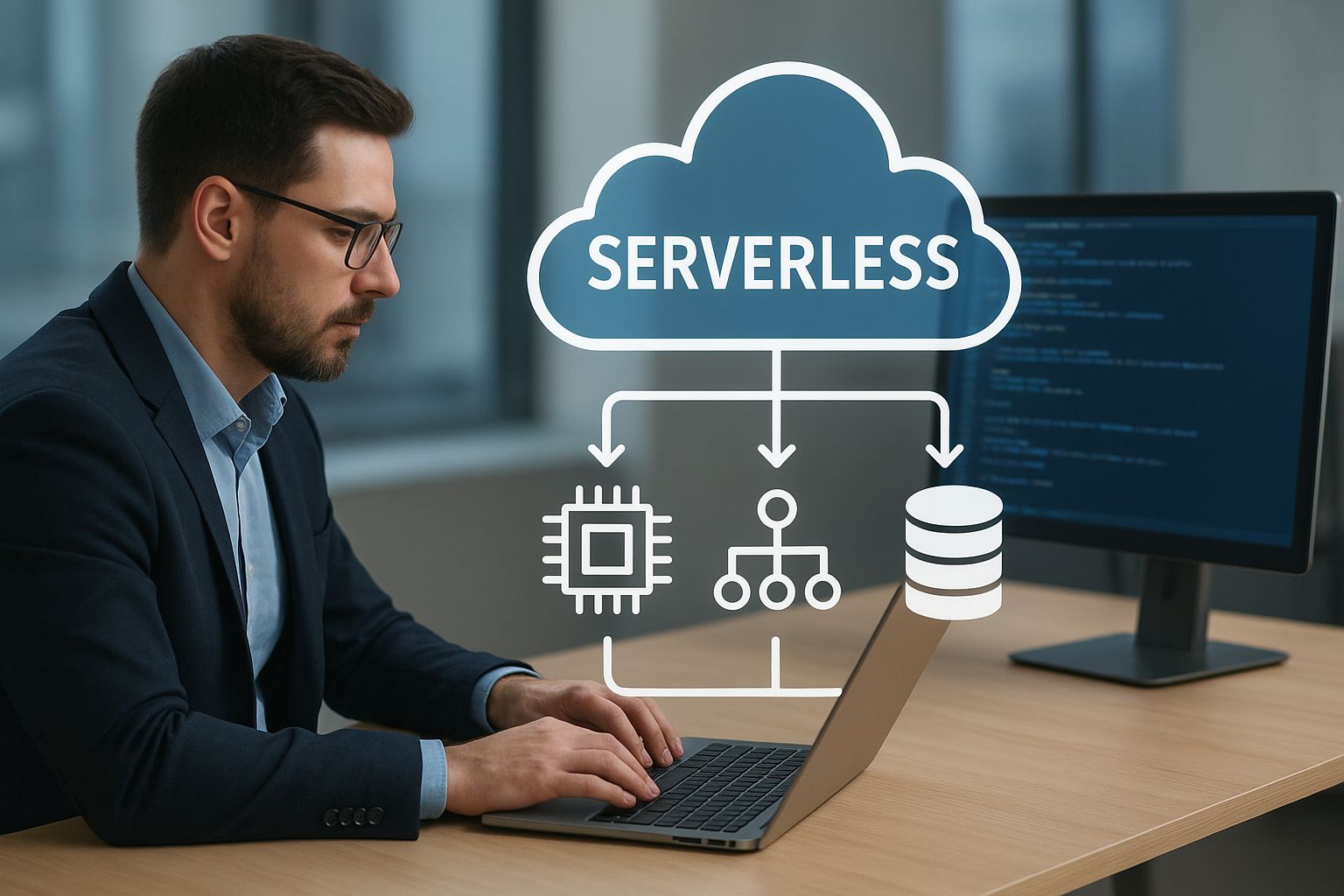
In recent years, serverless computing, a significant evolution in cloud architecture, has increasingly captured the attention of enterprises seeking agility and efficiency. As a model of cloud computing, serverless computing allows businesses to run their code without the need to manage servers, thus eliminating infrastructure management tasks.
The serverless approach enables companies to focus on their core competencies, developing and deploying applications without the burden of provisioning and scaling servers. This shift in technology is transforming how corporations drive digital transformation, particularly in rapidly evolving sectors like fintech, retail, and healthcare.
Notably, serverless computing operates on an event-driven basis, meaning processes are automatically initiated by specific events, thus optimizing resource consumption and reducing costs. For instance, an international retail giant recently transitioned to a serverless model to handle their dynamic inventory management. The retailer saw an immediate improvement in response times and a reduction in operational costs, highlighting the tangible benefits of serverless architectures.
While traditional cloud models also offer scalability, serverless adds a layer of granularity to scaling, allowing for micro-scale reactions to workloads instead of broad adjustments. This precision not only enhances performance but also enables more economical use of resources, as organizations pay only for the compute time they consume, offering a clear cost optimization pathway.
However, the shift to serverless is not devoid of challenges. With great power comes great responsibility, especially in managing the distributed components across various cloud service providers. Security concerns, latency issues, and the complexity of debugging and monitoring in a serverless environment require businesses to adopt comprehensive strategies that encompass robust security policies, efficient monitoring tools, and adept resource allocation.
Despite these hurdles, industry leaders are embracing serverless computing as a crucial component of their IT strategies. As enterprises continue to demand more agile frameworks for faster deployment and scalability, serverless computing stands out as an optimal choice, facilitating a new wave of innovation and cost-efficiency.
With serverless technology poised to redefine how businesses leverage the cloud, it is inexorably shifting the paradigm towards a more efficient, responsive, and strategic cloud utilization model. Enterprises looking to lead in the digital era must be prepared to integrate serverless computing into their operational frameworks, ensuring they remain competitive in the fast-paced digital marketplace.